The New Face of Medical Precision Manufacturing
Medical device manufacturing is undergoing a transformation in 2026 that few sectors can match. As global healthcare demands escalate and regulatory frameworks tighten, the role of precision CNC machining in producing life-saving implants, surgical instruments, and diagnostic components has never been more critical. The convergence of aging demographics, technological advancement, and supply chain realignment is creating both unprecedented opportunities and stringent requirements for manufacturers in this space.
For buyers of precision-machined medical components — from orthopedic implant designers to surgical robotics developers — understanding the current landscape is essential to making informed sourcing decisions.
FDA Clearance Pipeline Stays Full: 47 New Implants in Q1 2026
The U.S. FDA cleared 47 new implantable devices requiring precision machining in Q1 2026, marking the third consecutive quarter above 40 clearances, according to industry reporting from RivCut and Industry Week. The strongest categories include spinal interbody fusion devices, hip and knee articular surface components, dental implant systems, and craniofacial reconstruction plates.
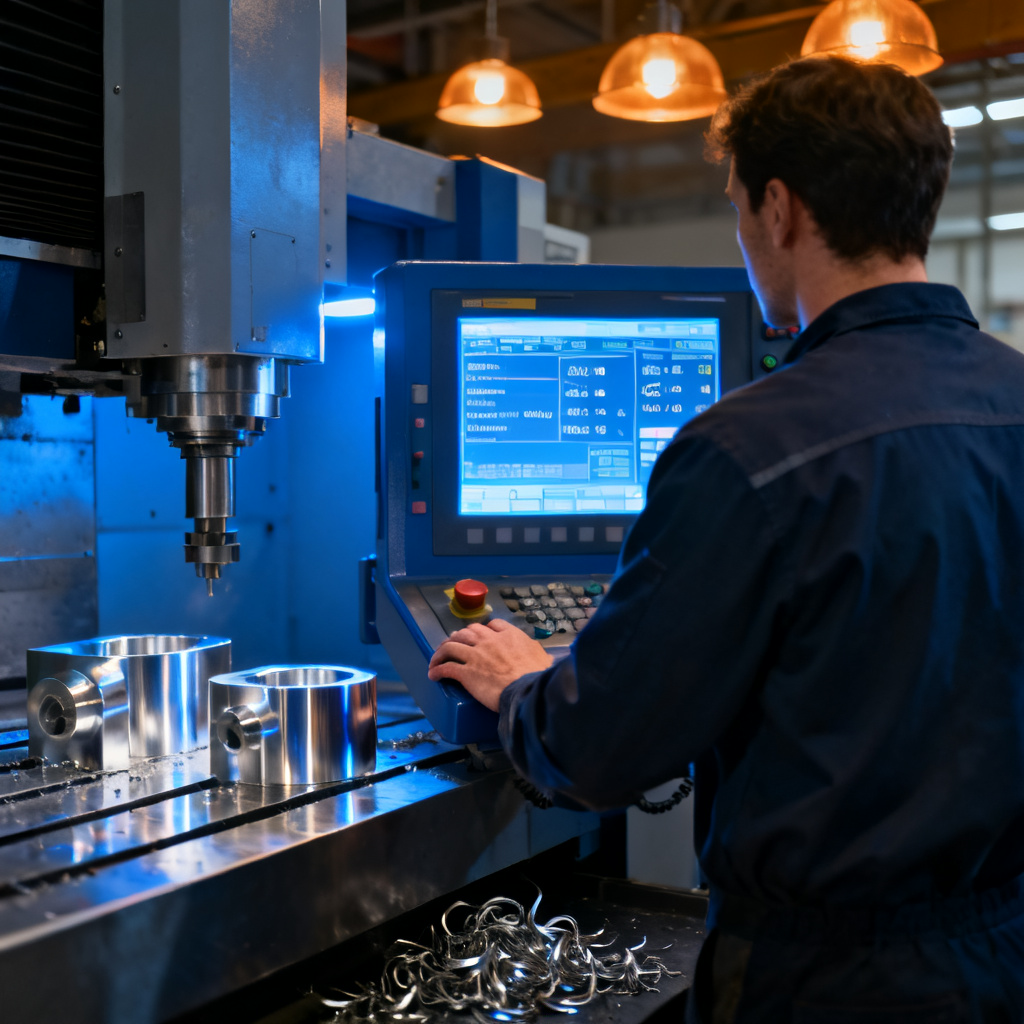
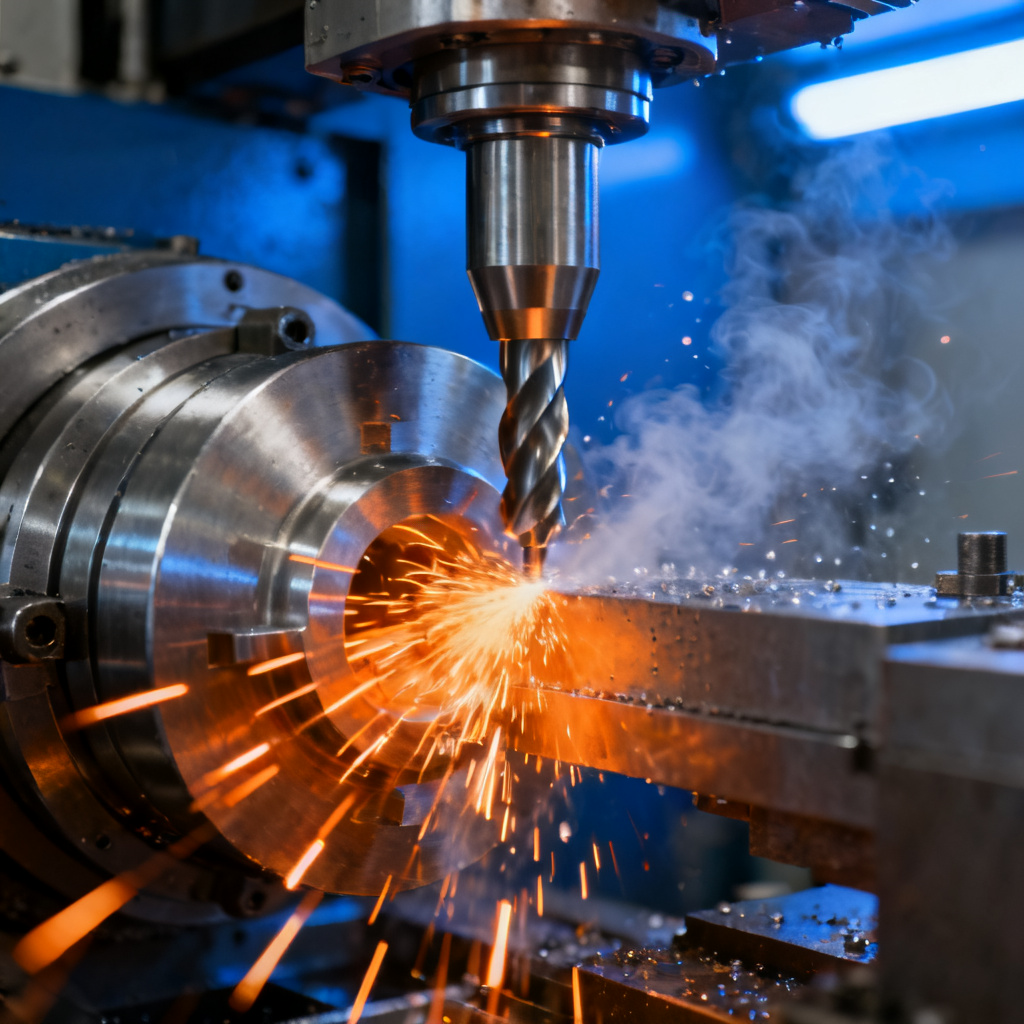
All four categories demand tight-tolerance CNC machining of biocompatible materials — primarily titanium alloy Ti-6Al-4V and PEEK (polyether ether ketone) polymer. Surface finish requirements for implant contact surfaces are exacting: Ra 0.4–0.8 μm for articulating surfaces, Ra 1.6 μm for bone-contact surfaces, and Ra 0.2 μm or better for dental implant threads. Five-axis CNC milling is typically required for the complex geometries of spinal cages and acetabular cups.
The clearance pace matters because 510(k) devices typically move from regulatory approval to first commercial sales within six to twelve months. This means the Q1 clearance batch creates predictable machined component demand through the second half of 2026, with device companies actively seeking qualified machining partners who can hold print tolerances and deliver the documentation packages FDA-regulated supply chains require.
Market Growth: Orthopedic Implants and the Precision Machining Boom
The global orthopedic implants market, valued at USD 48.11 billion in 2024, is projected to reach USD 79.31 billion by 2035, representing a compound annual growth rate (CAGR) of 4.5%, according to Roots Analysis. Meanwhile, the broader CNC machining market serving the medical sector is expected to grow at a robust 9.2% CAGR through 2035, as manufacturers increasingly turn to automated precision processes for high-value medical components.
This growth is fundamentally demographic. The 65-and-older population in the United States reached 58 million in 2025, and procedure volumes for hip replacement, knee replacement, and spinal fusion have exceeded pre-pandemic levels for six consecutive quarters. This demographic demand provides a reliable baseload for implant manufacturers that remains essentially decoupled from broader economic cycles — patients do not defer orthopedic surgery because interest rates are high.
Asia-Pacific Emerges as the Manufacturing Powerhouse
The Asia-Pacific region has become the most important growth engine for medical CNC machining. By 2035, the region will contribute approximately 43% of the medical CNC machining market, driven by three converging trends: rapid population aging and increased chronic disease prevalence, expansion of medical tourism and private healthcare investment, and rising disposable income driving demand for advanced medical treatments.
China, in particular, has emerged as a competitive destination for precision medical component manufacturing, with a well-established industrial base in CNC machining, competitive cost structures, and improving regulatory alignment with international standards. For global medical device companies, sourcing precision-machined components from China offers a compelling balance of quality, capacity, and cost efficiency.
Technology Trends: 5-Axis Machining, AI Compensation, and Digital Twins
Three defining technology trends are reshaping medical CNC machining in 2026. First, Swiss-type machining and 5-axis CNC centers have become essential for miniaturized components used in minimally invasive surgery — bone screws, catheter parts, and pacemaker components now routinely require tolerances as tight as ±0.0001 inches (≈2.5 μm).
Second, hybrid manufacturing combining additive (3D printing) with subtractive (CNC) processes has moved from specialist option to industry standard. Patient-specific implants are often produced by 3D printing complex porous bone-like structures from CT/MRI data, then using 5-axis CNC machining to finish joint surfaces, threads, and interfaces with micron-level accuracy. This approach reduces material waste by over 40% compared to purely subtractive methods.
Third, AI-driven closed-loop monitoring systems now serve as digital quality inspectors during machining. Thermal error compensation sensors monitor spindle heat and automatically adjust tool offsets, while tool wear prediction algorithms replace tools before catastrophic failure. Scrap rates in advanced medical machining facilities have dropped to near-zero levels as a result.
Regulatory Landscape: FDA QMSR and the Traceability Imperative
February 2026 marked a watershed moment for medical device quality regulation. The FDA's Quality Management System Regulation (QMSR) came into full effect, fully aligning FDA requirements with ISO 13485:2016. For CNC machining suppliers, this means mandatory digital Device History Records (DHRs), end-to-end traceability of materials and processes, and significantly higher audit readiness requirements.
Traceability has become the differentiating requirement separating shops that win medical device contracts from those that cannot. Every machined component destined for an FDA-cleared implant must carry a complete documentation chain: raw material lot certificate with chemistry and mechanical property data, operator work order records, in-process inspection data, tooling change logs, and final inspection records. This paperwork burden is substantial — it can equal or exceed the cost of the machining itself on small lot sizes.
Adding to supply chain pressure, Ti-6Al-4V bar stock of implant-grade purity now carries lead times of 12–16 weeks, up from 6–8 weeks in 2024, as titanium supply tightens globally. Device companies that locked in annual blanket orders with material distributors are insulated; those relying on spot purchasing face allocation constraints.
What This Means for Medical Device Buyers
For procurement managers and supply chain directors sourcing precision-machined medical components, the current environment demands a strategic approach to supplier selection. Key considerations include:
- Verify ISO 13485 certification and FDA QMSR compliance — these are non-negotiable baselines for medical work
- Audit traceability infrastructure: digital DHR capability, material lot tracking, and inspection documentation workflows
- Evaluate material sourcing: suppliers with safety stock of implant-grade titanium and PEEK are preferred partners
- Assess technology capability: 5-axis machining, Swiss-type turning, and CMM inspection are requirements, not differentiators
- Consider total cost of ownership: the lowest unit price rarely wins when compliance failures and supply disruptions are factored in
Hold-Tech Precision Industrial: Ready for 2026 and Beyond
Hold-Tech Precision Industrial Co., Ltd. brings decades of precision manufacturing expertise to the medical device supply chain. Our facility is equipped with advanced 5-axis CNC machining centers, CNC turning and milling capabilities, and full CMM inspection infrastructure — precisely the capabilities that medical device buyers require in today's demanding regulatory environment.
We understand that medical component manufacturing demands more than just machining accuracy. It requires rigorous quality management, complete material traceability, and a commitment to continuous improvement that meets the evolving standards of FDA QMSR and ISO 13485.
- 5-axis CNC machining for complex implant geometries and tight tolerances
- CNC turning and milling for precision surgical instruments and device components
- High-volume production capability with consistent quality across every batch
- Full CMM inspection, surface profiling, and material verification
- ISO 9001 quality management system with documented traceability workflows
- Experienced engineering team supporting DFM and design collaboration
Contact us today to discuss your precision medical component requirements: [email protected] / +86-186-60386138