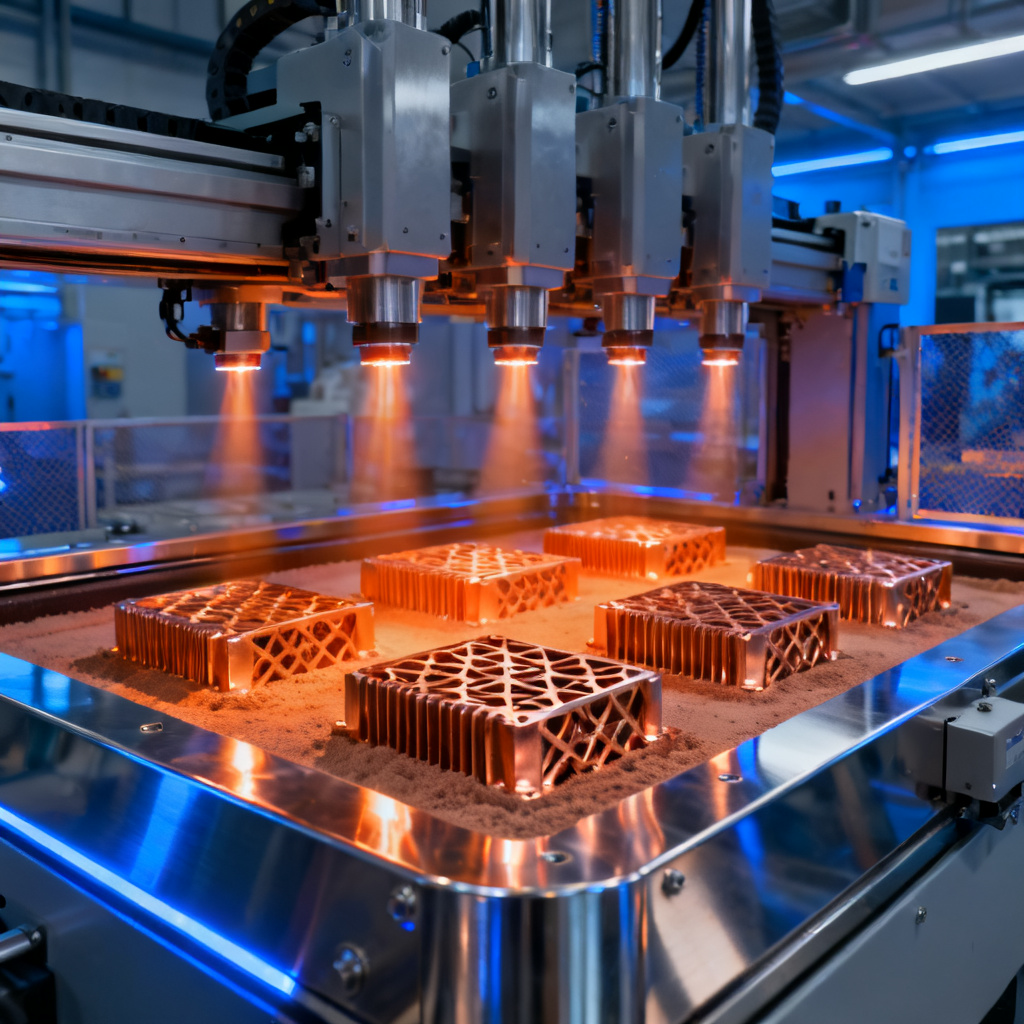
On April 2, BLT (Platinum Laser) officially announced that its BLT-S400 metal 3D printing platform has surpassed 100,000 copper alloy parts production, becoming the first manufacturer to publicly verify industrial-scale, repeatable mass production in copper alloy additive manufacturing.
Technical Breakthrough: Solving Copper Printing Challenges
Copper alloys are core materials for data centers, optical communications, new energy vehicles, aerospace thermal management, and electronic components. However, copper's high laser reflectivity and rapid heat dissipation cause printing defects like cracking and unstable forming, limiting production to small batches for a long time.
BLT built a comprehensive system featuring eight lasers, large format, and full-process control, successfully solving the mass production challenges of copper alloy 3D printing. Domestic 3D printing equipment manufacturers are launching large-format, high-power copper alloy-specific equipment, with the industry breaking bottlenecks through multiple technical approaches.
Precision Machining: From Additive to Subtractive Integration
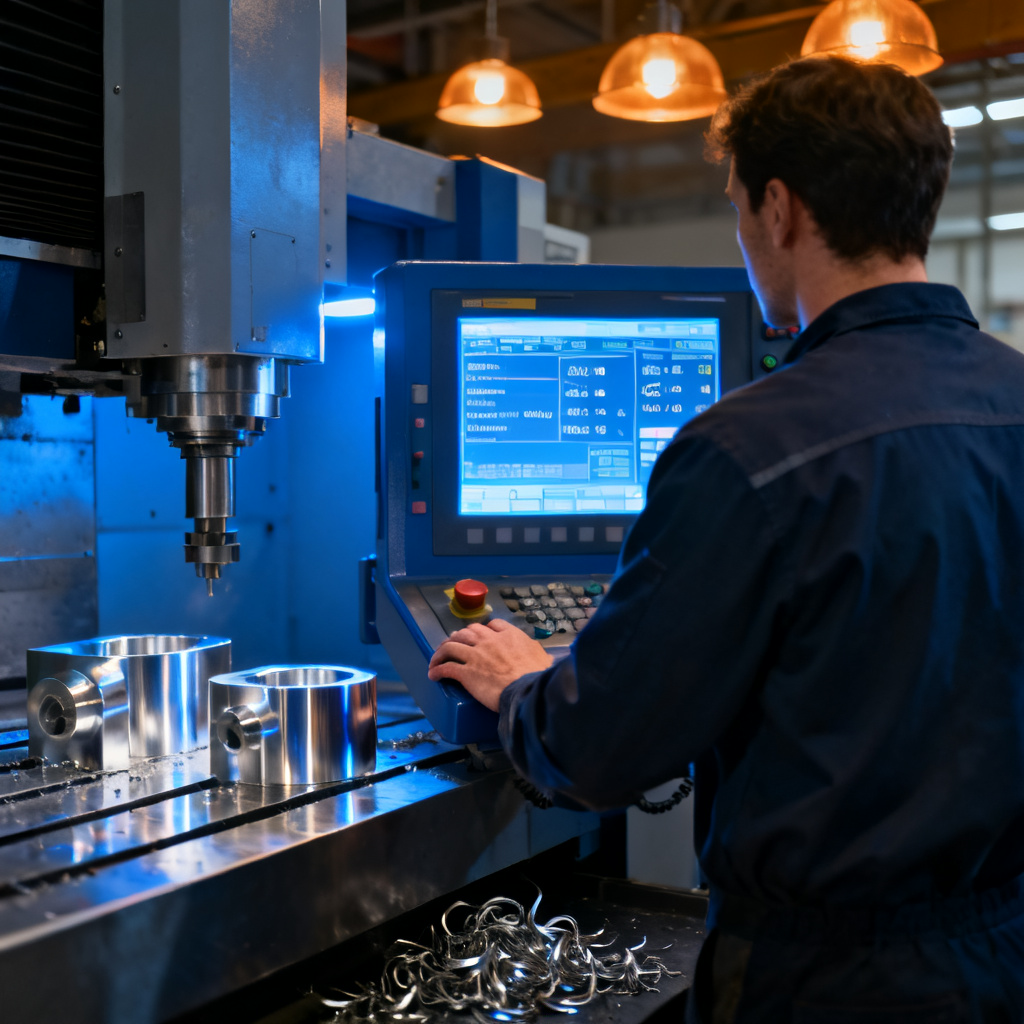
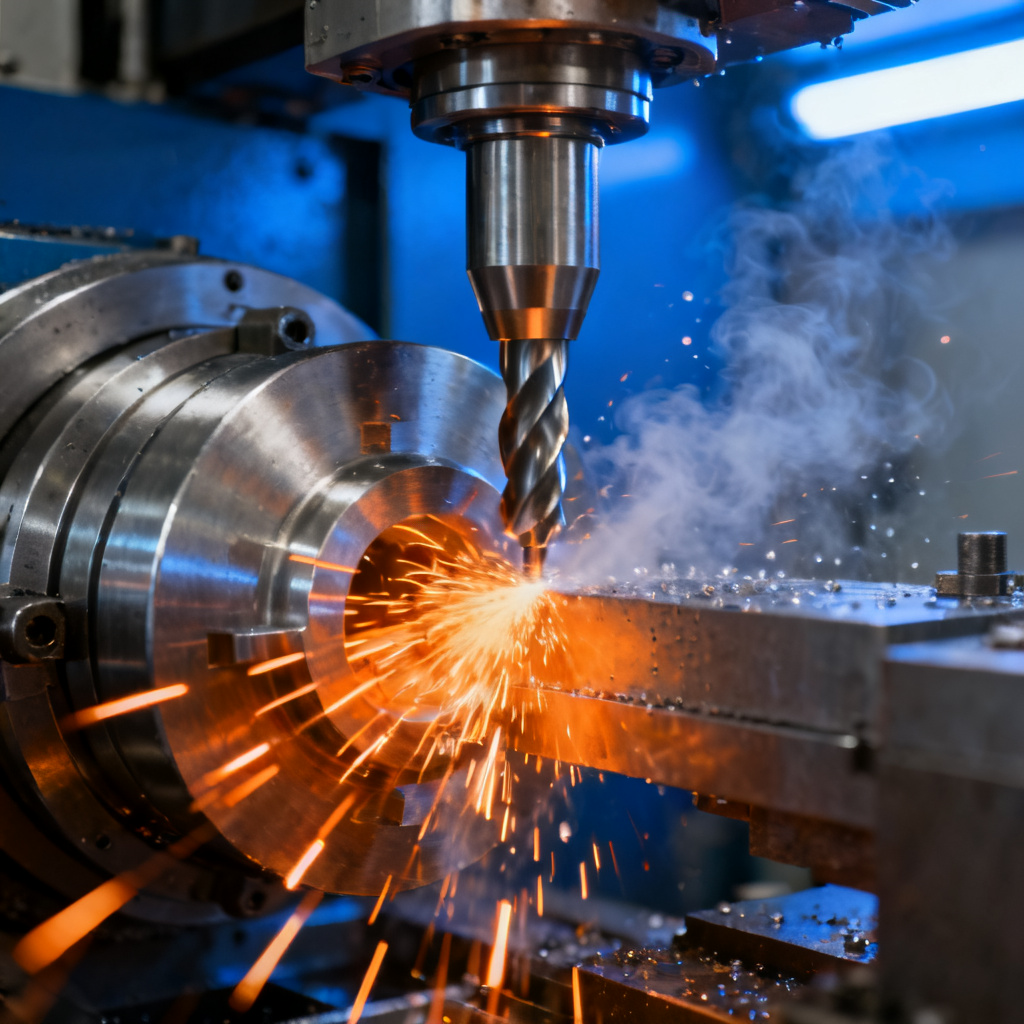
3D printing is just one part of the manufacturing process. To achieve final product precision requirements, CNC precision machining is often required. Taking 3D printed copper alloy heat sinks as an example, mounting surfaces and sealing surfaces typically require CNC machining to guarantee flatness and surface finish.
Hold-Tech Precision Industrial has accumulated extensive experience in post-processing 3D printed parts. We provide precision CNC finishing services for various additive manufactured parts, including five-axis machining of complex surfaces, micro-hole machining, and high-precision surface grinding, ensuring 3D printed parts meet assembly and usage requirements.
Application Expansion: From Thermal Management to Structural Parts
The mass production of copper alloy 3D printing opens new opportunities in multiple high-end manufacturing fields. In data centers and 5G base stations, 3D printed complex flow channel heat sinks are lighter and more efficient than traditionally manufactured ones; in new energy vehicles, motor windings and inverter heat sinks can achieve performance breakthroughs through 3D printing.
These applications have stringent requirements for part precision, surface quality, and material performance. Hold-Tech has developed specialized machining process plans for different application scenarios, covering difficult-to-machine materials like high-temperature alloys, titanium alloys, and copper alloys.
Process Integration: 1+1>2 Manufacturing Synergy
BLT's 100K production achievement relies on multi-domain collaborative innovation in materials science, laser technology, and process control. Similarly, in precision manufacturing, single processes can hardly meet complex parts' full performance requirements.
Hold-Tech adopts a composite process route of "3D printing + CNC machining + surface treatment" to provide customers with one-stop solutions from prototype to mass production. Whether complex internal cavity structural parts, lightweight topology-optimized parts, or multi-material composite parts, we can provide optimal manufacturing solutions.
BLT's success proves that China has taken the global lead in industrial copper alloy 3D printing. As a precision machining service provider in the downstream industry chain, Hold-Tech will continue deepening process innovation to create greater value for customers.